Exhibit
Group Show
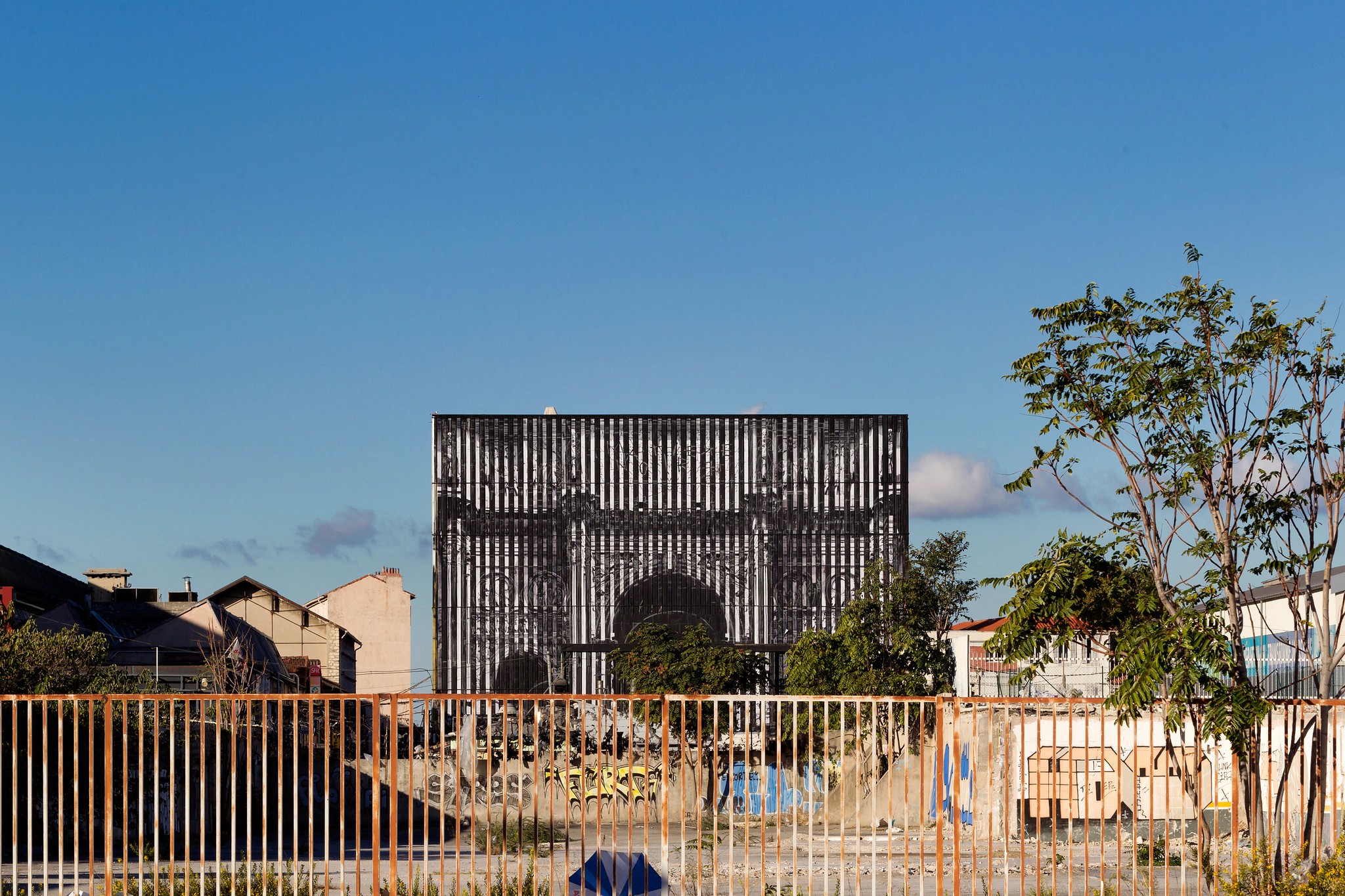
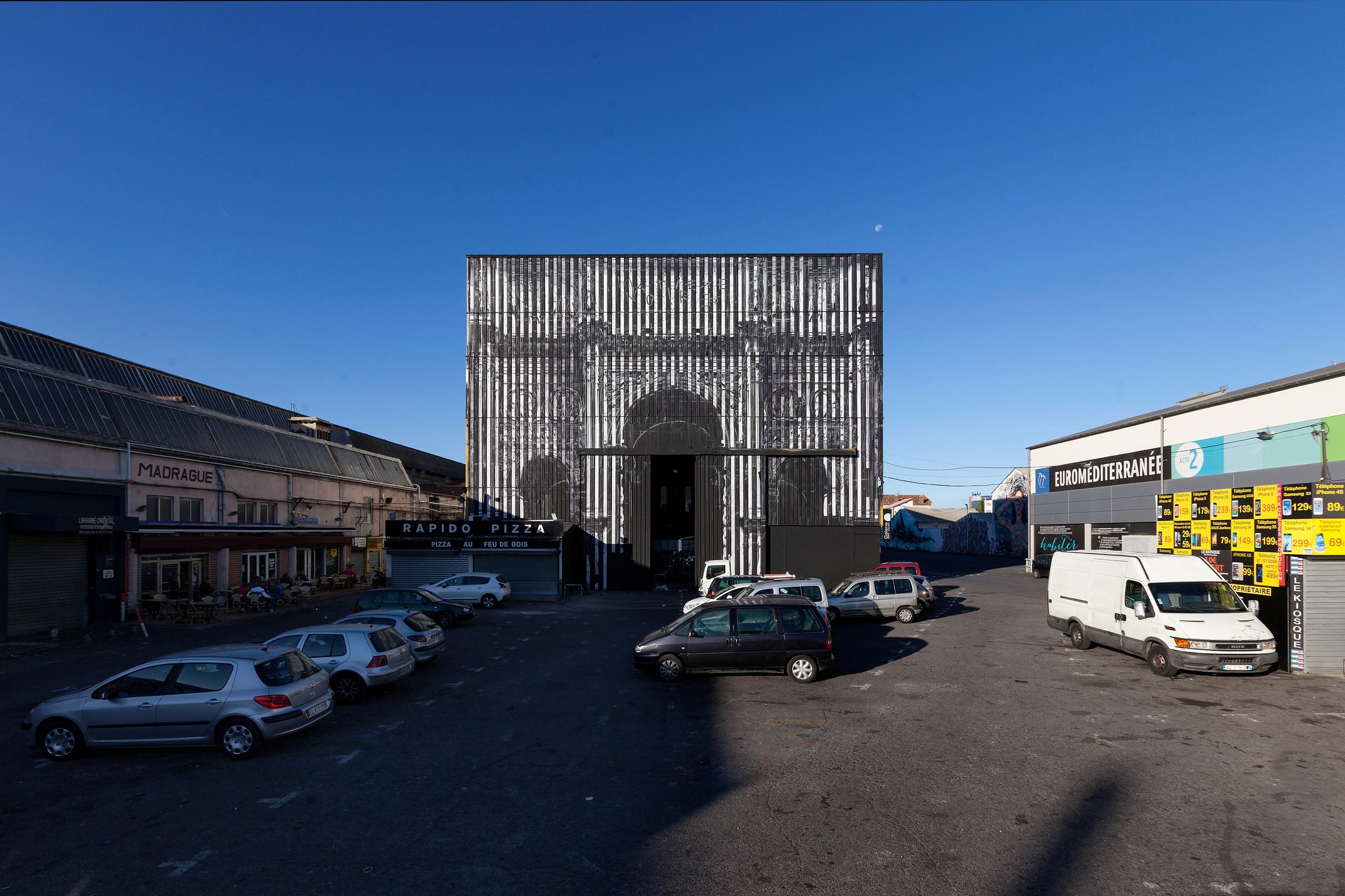
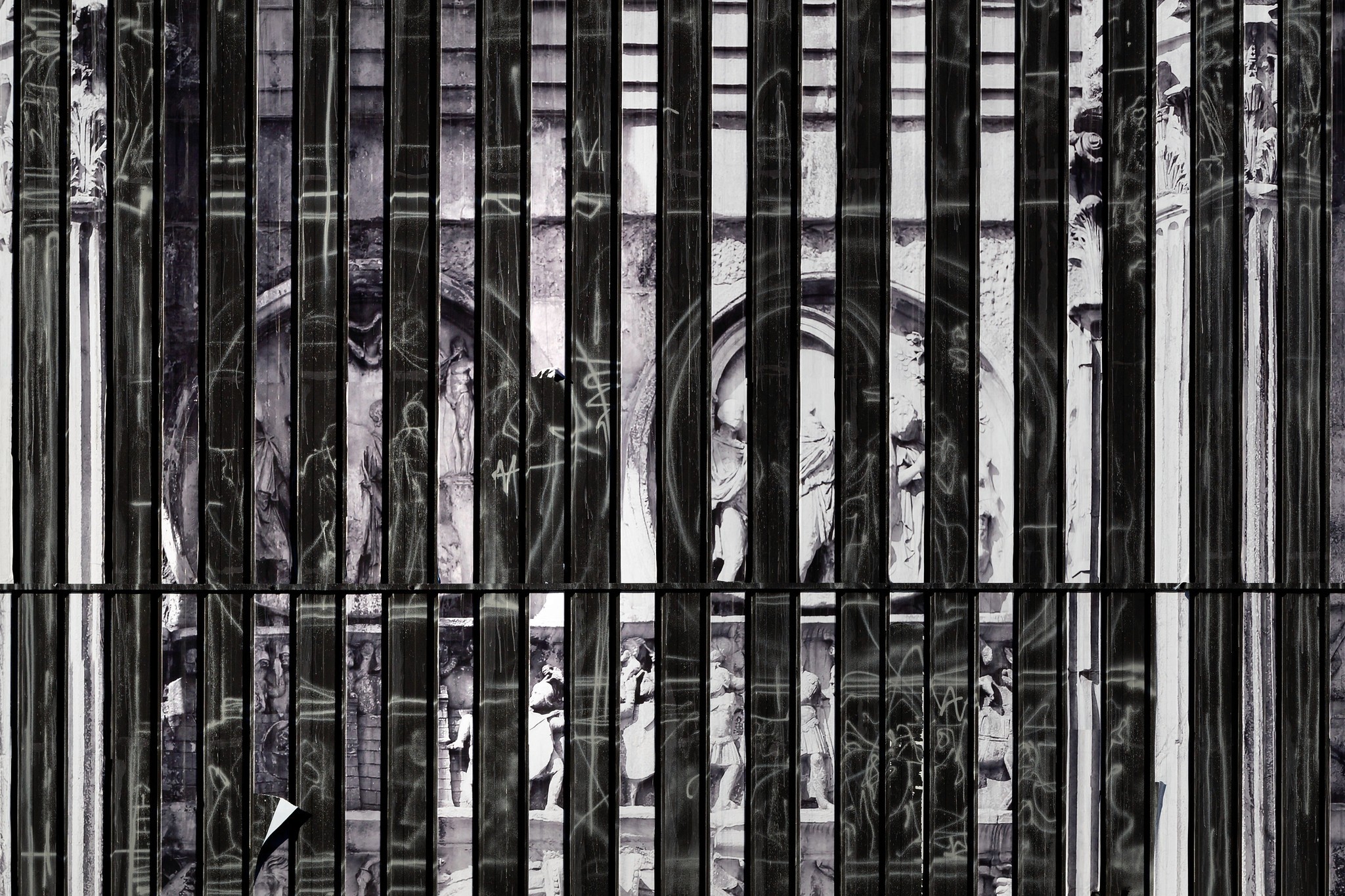
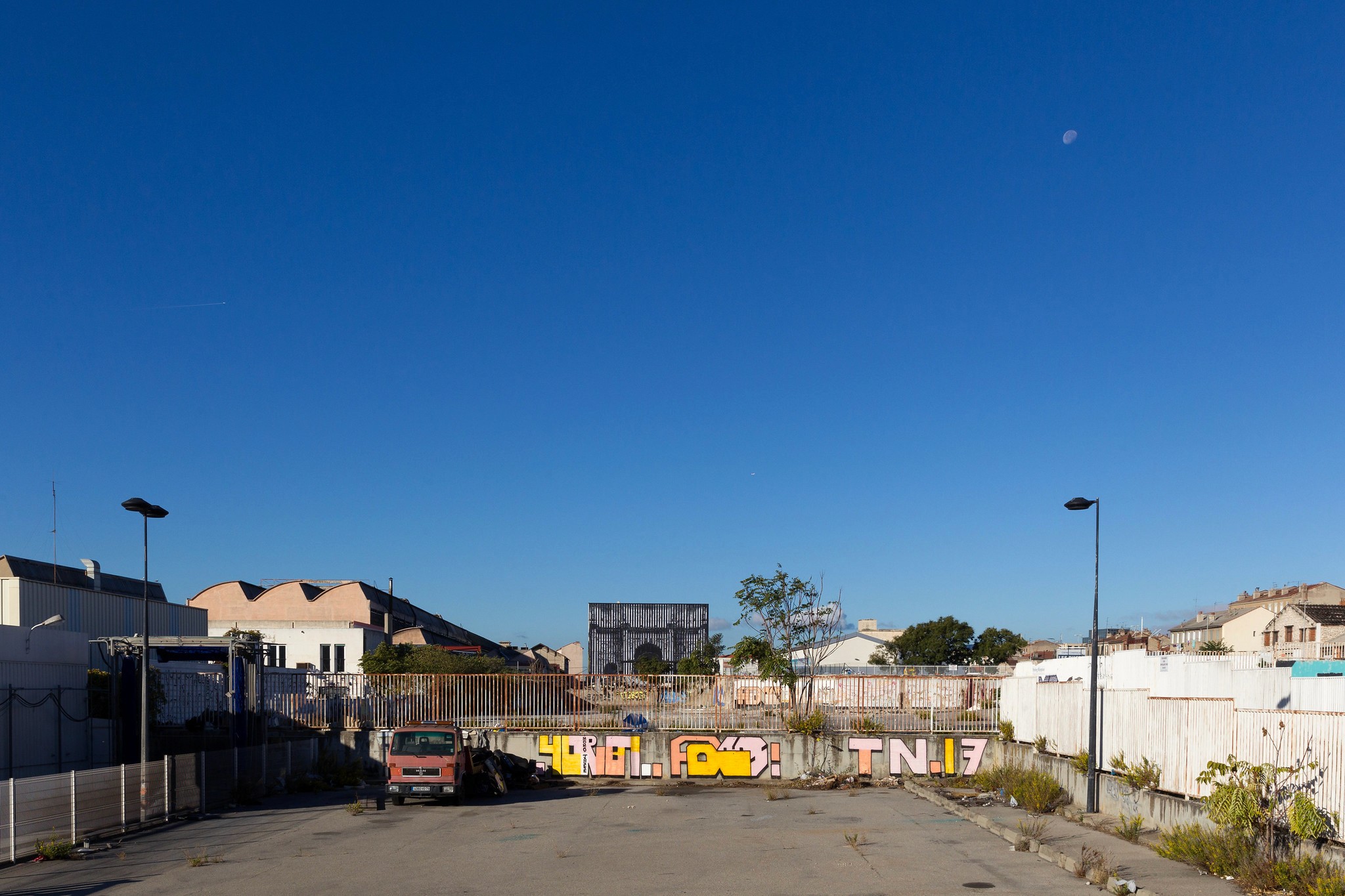
Nel 2017 siamo stati invitati da Gonzalo Borondo a Marsiglia per contribuire alla costruzione della mostra Matière Noire, allestita negli spazi del mercato delle pulci, a poca distanza dal centro storico. A noi venne affidata la progettazione dell’ingresso principale: una grande struttura in ferro che introduceva il visitatore al percorso espositivo.
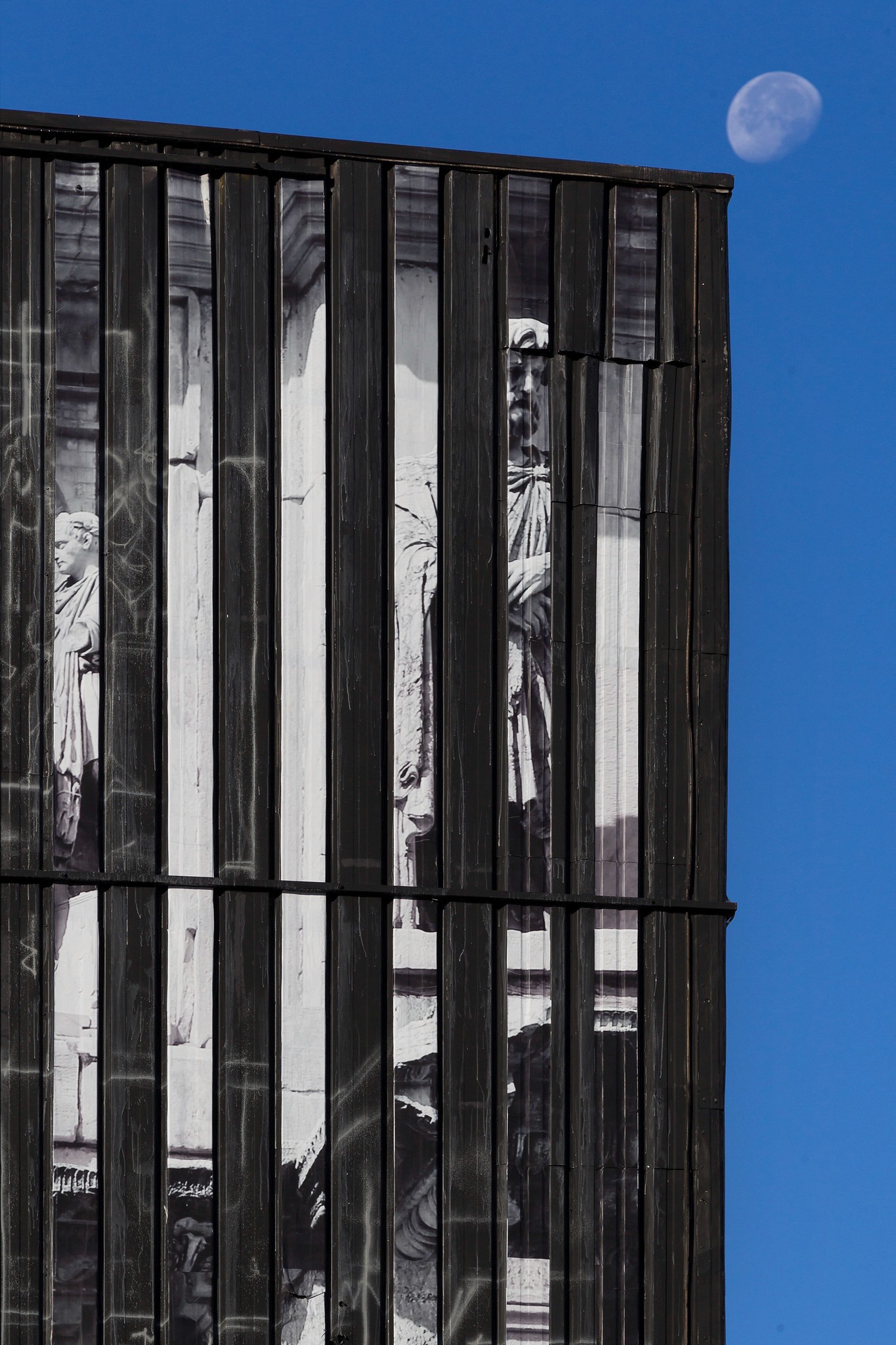
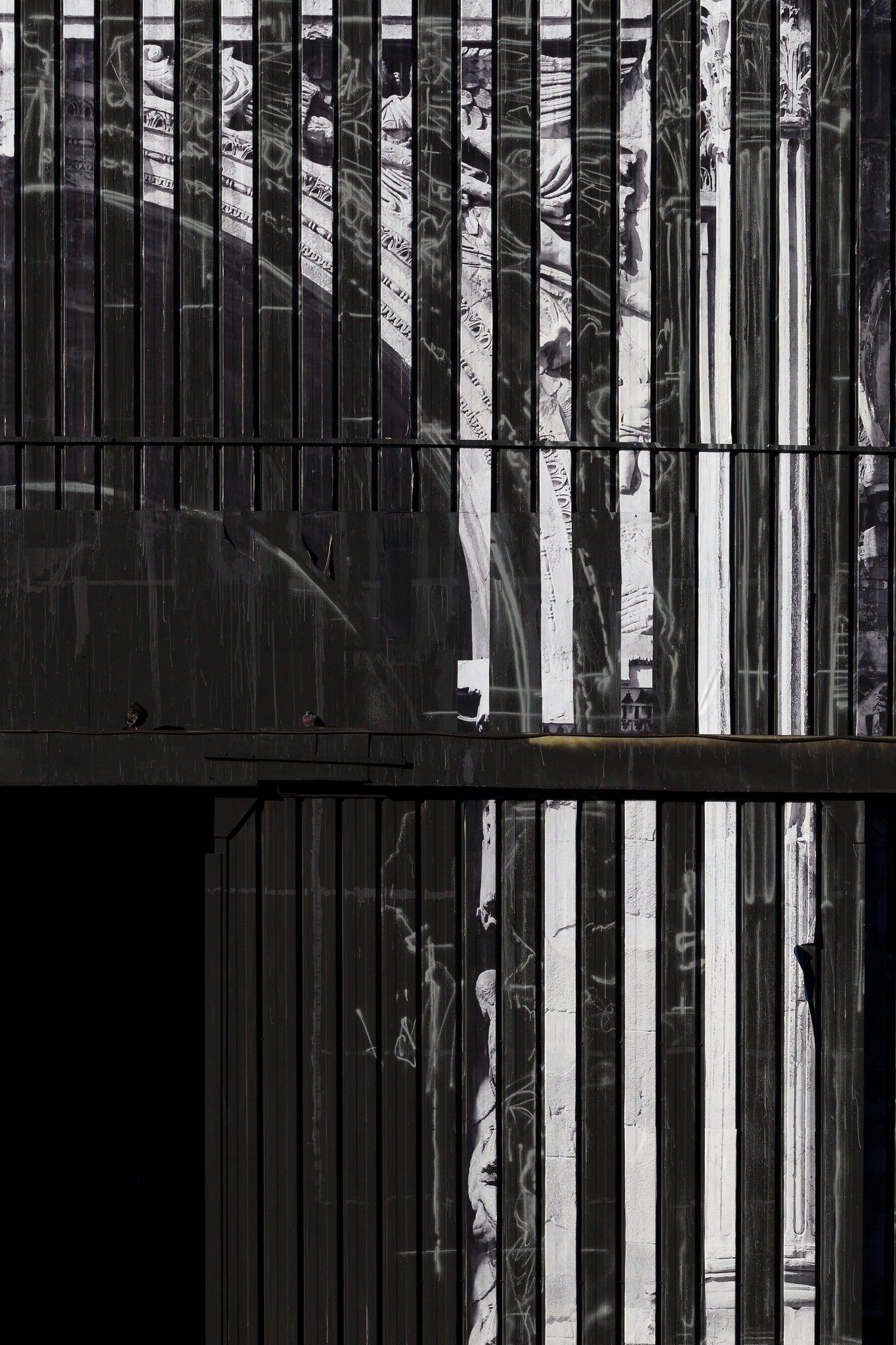
Il progetto, sviluppato durante una residenza di oltre un mese, nacque come una collaborazione diretta con Borondo. Lui realizzò, con spray grigio su lamiera nera, l’abbozzo dell’Arco di Costantino, ridotto a segno essenziale, quasi una memoria in sospensione. Il nostro intervento consisteva nell’applicare strisce di carta stampata, anch’esse raffiguranti l’arco, ma in forma frammentata e discontinua.
L’opera era concepita come un dispositivo a due tempi: con il passare dei giorni, la carta avrebbe iniziato a staccarsi, rivelando progressivamente il disegno sottostante. L’ingresso assumeva così una doppia vita, oscillando tra apparizione ed erosione, tra immagine e traccia.
Durante la permanenza, il lavoro si intrecciò con il contesto sociale del quartiere, abitato in gran parte da comunità nordafricane e musulmane. La loro presenza quotidiana, l’interesse e la cura con cui seguirono l’evoluzione dell’allestimento contribuirono a definire l’atmosfera del progetto, influenzando positivamente la nostra esperienza e offrendo un ulteriore livello di lettura sul rapporto tra memoria, identità e trasformazione.
In questo modo il tema della memoria, centrale nella mostra, veniva affrontato come processo instabile e non lineare: una stratificazione soggetta a perdita, riemersione e mutamento, più vicina al moto dell’onda che alla fissità dell’archivio.
In 2017 we were invited by Gonzalo Borondo to Marseille to contribute to the construction of the exhibition Matière Noire, staged in the spaces of the flea market, a short distance from the historic centre. We were entrusted with the design of the main entrance: a large iron structure that introduced the visitor to the exhibition route.
The project, developed during a residency of over a month, was born as a direct collaboration with Borondo. He created, using grey spray paint on black sheet metal, a sketch of the Arch of Constantine, reduced to an essential mark — almost a memory held in suspension. Our intervention consisted of applying strips of printed paper, also depicting the arch, but in a fragmented and discontinuous form.
The work was conceived as a two-stage device: as the days passed, the paper would begin to detach, progressively revealing the drawing beneath. The entrance thus took on a double life, oscillating between appearance and erosion, between image and trace.
During our stay, the work became intertwined with the social fabric of the neighbourhood, largely inhabited by North African and Muslim communities. Their daily presence, and the interest and care with which they followed the evolution of the installation, helped define the atmosphere of the project — positively shaping our experience and offering an additional layer of meaning on the relationship between memory, identity and transformation.
In this way, the theme of memory — central to the exhibition — was approached as an unstable and non-linear process: a stratification subject to loss, re-emergence and change, closer to the motion of a wave than to the fixity of an archive